
When the hot water goes out, everyone in the building notices. Tenants call, kitchens stop, restrooms go cold, and in healthcare settings it becomes a compliance issue fast.
The first question is always the same: can we fix it, or is it time for a new one? This guide walks Miami Valley building owners and facility managers through that decision, explains why sizing matters more than most people think, and shows what a replacement looks like when SKM Services handles it.
When a Repair Makes Sense
If the tank itself is sound and the unit is still in the first half of its expected life, a repair is usually the smart call. Most no-heat and low-heat calls trace back to a component, not the tank.
| Symptom | Likely cause | Typical fix |
|---|---|---|
| No hot water (gas) | Igniter, flame sensor, thermocouple, or gas valve | Replace the failed component |
| No hot water (electric) | Failed heating element or thermostat | Replace element or thermostat |
| Not enough hot water | One element out, sediment buildup, or failed dip tube | Repair, flush, or replace dip tube |
| Water dripping from the relief valve | Faulty T&P valve or excess pressure | Replace T&P valve; check or replace expansion tank |
| Rotten-egg smell | Anode rod reacting with the water | Replace or upgrade the anode rod |
| Leak at a fitting or connection | Loose or corroded fitting | Repair piping or connections |
A good rule of thumb: if the repair is under half the cost of replacement and the unit is still young, fix it. Pair the repair with a flush and an anode check, and you can add real years to the tank.
When It’s Time to Replace
Some problems can’t be fixed with parts. If you see any of these, start planning a replacement before the unit picks the day for you:
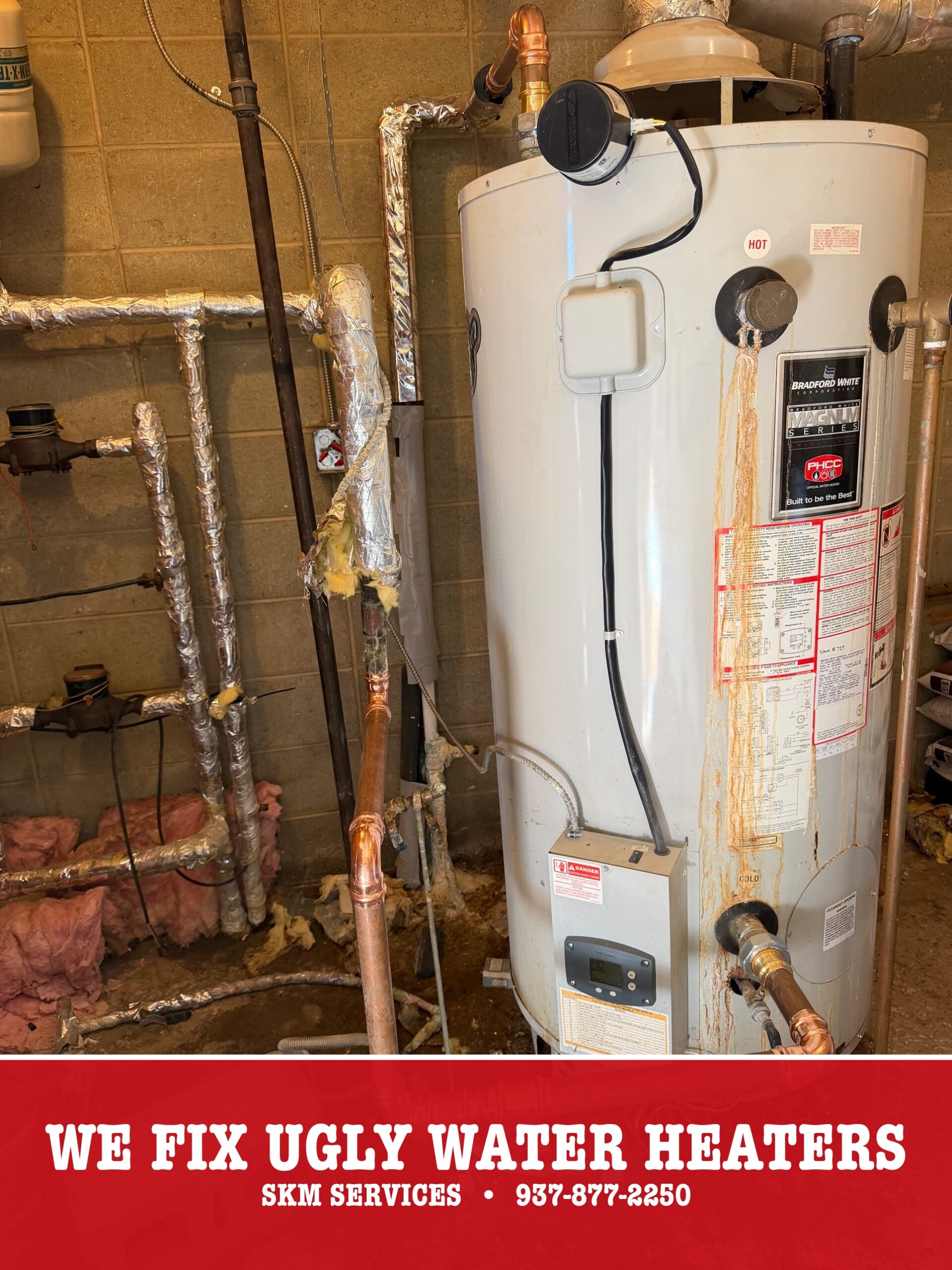
- The tank is leaking. Water seeping from the tank body or pooling underneath means the lining has failed. There is no repair for a leaking tank.
- Rusty or discolored hot water. When only the hot side runs brown, the inside of the tank is corroding.
- Rumbling, popping, or banging. Heavy sediment has hardened in the bottom, cutting efficiency and stressing the tank.
- Age. Commercial tank-type heaters in high-use buildings commonly last 8–12 years, and less with hard water or heavy demand. Past that range, every repair is a bet on borrowed time.
- Repairs keep stacking up. If you’ve had multiple service calls in the past year, the money is better spent on a new unit.
- It can’t keep up anymore. If the building’s use has changed (more units, a new kitchen, added staff), the heater may simply be undersized now.
- Efficiency. Older standard-efficiency units waste fuel every hour they run. Although, new federal efficiency standards for commercial water heaters that took effect October 6, 2026 have delayed enforcement – energy is still a concern with new replacements.
The best replacement is a planned one. Swapping a unit on your schedule costs less, and causes far less disruption, than an emergency replacement after a tank floods a mechanical room.
Sizing It Right: Why “Same as the Old One” Isn’t Always Right
The most common replacement mistake is installing whatever was there before. The old unit may have been under or oversized from day one, or the building may have changed since it went in.
An undersized heater runs out of hot water at peak times, runs constantly, and wears out early. An oversized heater costs more up front, short cycles and wastes energy keeping extra water hot that nobody uses.
Proper commercial sizing looks at:
- Peak demand. How much hot water the building uses in its busiest hour, not its average day. Think morning showers in an apartment building or a church kitchen on a Sunday.
- Recovery rate. How many gallons per hour the heater can bring up to temperature. Recovery often matters more than tank size.
- Storage capacity. How much hot water is ready before recovery has to keep up.
- Temperature rise. The difference between incoming water and the setpoint. Groundwater in the Miami Valley runs colder in winter, so a heater has to work harder in January than in July.
- Building type and use. Multi-family, office, restaurant, church, manufacturing, and healthcare buildings all have very different demand patterns. Healthcare and food service also have temperature requirements that affect sizing and mixing valves.
- Fixture count and occupancy. The number of showers, sinks, dishwashers, and people the system serves.
What a Replacement Looks Like With SKM
Water heater replacements are routine work for our crews. We do them regularly, so we show up with the right equipment, the right fittings, and a plan to get in and out with as little disruption to your building as possible.
- Assess and size. We look at the existing unit, the building’s demand, and how the space is used today, then recommend the right heater instead of a straight swap.
- Plan around your operation. We schedule the changeover to keep hot-water downtime short and coordinate with tenants, staff, or kitchen schedules.
- Remove the old unit. Our crews have the equipment to move heavy commercial tanks out of tight mechanical rooms, basements, and stairwells safely.
- Install to code. That includes gas piping, venting, expansion tanks, relief valves, and mixing valves where needed. High-efficiency units often require venting and condensate changes, and we handle those as part of the job.
- Start up and verify. We test, set temperatures, and confirm the system is delivering before we leave.
- Haul away and clean up. The old unit leaves with us.
After the install, we can set you up with a maintenance plan, including annual flushing, anode inspection, and safety checks, so your new heater reaches the full end of its service life.
Not Sure Whether to Repair or Replace?
That’s exactly the call we help building owners make every week. SKM is locally owned and serves the Miami Valley, and we’ll give you a straight answer on whether your water heater has years left or it’s time to plan a replacement.
Contact SKM Services today to schedule a service call or a replacement assessment.